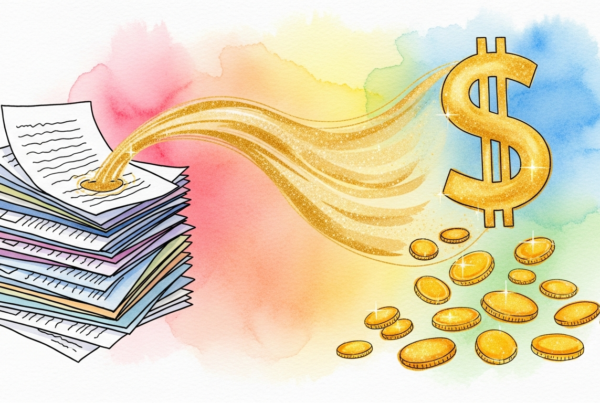
The sales floor at Meridian Technologies falls silent as Marcus Chen rises from his desk. It’s the final day of the quarter, and he’s just closed his thirty-seventh deal—pushing him 143% above quota while most of his colleagues still scramble to reach the baseline. This isn’t luck or an anomaly. It’s the fourth consecutive quarter Chen has led the board. When asked about his consistency, Chen shrugs with practiced modesty: ‘I just follow a system.’
That system—a carefully calibrated approach to sales that transcends personality and product—is what separates the elite performers from the merely adequate across industries. The mythology of sales often celebrates the natural-born closer, the charismatic force who could ‘sell ice to Eskimos.’ But research tells a different story: top performers aren’t necessarily the most charming or aggressive. Rather, they’re methodical practitioners who have mastered specific strategies that can be studied, learned, and replicated.
The Science of Preparation
When Jill Konrath, author of ‘SNAP Selling,’ studied top sales performers across 74 companies, she found their preparation rituals bordered on obsessive. ‘Elite salespeople spend triple the time researching prospects compared to average performers,’ Konrath notes. ‘They’re not just checking LinkedIn profiles; they’re building comprehensive dossiers that include the prospect’s business challenges, competitive landscape, and recent strategic initiatives.’
This research intensity manifests in what sales leadership expert Jason Jordan calls ‘contextual knowledge’—the ability to speak the prospect’s language with such fluency that you’re perceived not as a vendor but as a peer. At pharmaceutical giant AstraZeneca, top performers routinely read medical journals relevant to their physician customers, allowing them to discuss clinical studies rather than merely reciting product features.
The preparation advantage extends beyond knowledge acquisition. Elite salespeople mentally rehearse conversations, anticipating objections and crafting responses that feel spontaneous but are actually the product of deliberate practice. ‘It’s like a chess grandmaster who can see fifteen moves ahead,’ explains sales psychologist Dr. Emma Richardson. ‘When a prospect says they’re happy with their current solution, the elite performer has already prepared three different angles to reframe the conversation.’
The Questioning Paradigm
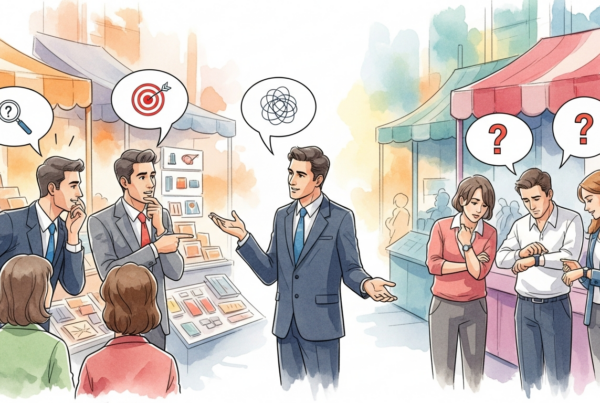
The average salesperson speaks 81% of the time during initial client meetings. Top performers speak just 31%, according to research from Gong.io, which analyzed millions of sales calls. This radical inversion of the talking-listening ratio stems from a sophisticated questioning methodology that elite salespeople have perfected.
‘The questions themselves become the persuasion,’ explains Neil Rackham, whose landmark study of 35,000 sales calls led to the SPIN Selling methodology. ‘When you ask the right sequence of questions, the prospect convinces themselves of the need for change.’
At IBM, salespeople who exceeded quota for five consecutive years demonstrated a pattern: they asked an average of 21.2 questions per discovery call, compared to 11.4 for moderate performers. More tellingly, 62% of their questions focused not on current problems but on future implications and the ripple effects of those problems throughout the organization.
This questioning discipline creates what psychologists call ‘cognitive dissonance’—the mental discomfort that occurs when people recognize inconsistencies in their thinking. By guiding prospects to articulate the gap between their current state and desired future, elite salespeople create a tension that demands resolution—often in the form of a purchase decision.
The Value Narrative
When Amy Franko, author of ‘The Modern Seller,’ shadowed top performers at professional services firms, she observed that they never discussed features or even benefits in isolation. Instead, they constructed what Franko terms ‘value narratives’—stories that position their solution within the client’s broader business context.
‘Average sellers say, ‘Our platform reduces processing time by 37%,” Franko explains. ‘Elite sellers say, ‘When processing time drops by 37%, your team can handle the seasonal volume spike without temporary staffing, which saved one of our clients $428,000 last year while improving customer satisfaction scores.”
This narrative approach activates different neural pathways in the listener’s brain. Neuroscience research using fMRI scans shows that feature-based selling primarily engages the language-processing centers, while story-based selling activates regions associated with personal experience and emotion. The latter creates stronger memory encoding and higher-quality decision-making.
At Salesforce, representatives who consistently exceed quota spend 38% more time discussing customer outcomes and business impact than product capabilities. They’ve internalized what behavioral economist Daniel Kahneman demonstrated in his Nobel Prize-winning research: people make decisions based on potential value rather than objective features.
The Relationship Architecture
Perhaps the most counterintuitive finding in modern sales research is that top performers are actually less focused on relationship-building than their average counterparts—at least in the conventional sense. ‘Elite salespeople don’t try to be your friend,’ explains Matthew Dixon, co-author of ‘The Challenger Sale.’ ‘They try to be your intellectual partner.’
This distinction manifests in how top performers allocate their relationship-building energy. Rather than general rapport-building, they focus on establishing what social psychologists call ‘cognitive trust’—the confidence in someone’s competence and reliability—rather than ‘affective trust,’ which is based on emotional bonds.
At Accenture, the top-performing consultants maintain detailed records not of their clients’ golf handicaps or children’s names, but of their strategic priorities, risk tolerance, and decision-making patterns. They use this intelligence to time proposals, customize presentations, and navigate organizational politics with surgical precision.
The relationship architecture extends beyond the buying cycle. Elite performers establish systematic touchpoints that deliver value independent of any immediate sales opportunity. ‘They’re playing an infinite game,’ says Simon Sinek, whose work on leadership has been embraced by sales organizations. ‘They’re building a career-spanning network rather than chasing the next commission check.’
As Marcus Chen packs up his desk at Meridian Technologies, having secured his position atop the leaderboard for another quarter, he doesn’t attribute his success to innate talent or superhuman effort. Instead, he points to the methodical application of learnable strategies—preparation rituals, questioning frameworks, value narratives, and relationship systems—that have transformed selling from an art of persuasion to a science of facilitation. In doing so, he represents a new paradigm in sales excellence: one based not on charisma but on process, not on pressure but on partnership.